
Introduction / Executive Summary
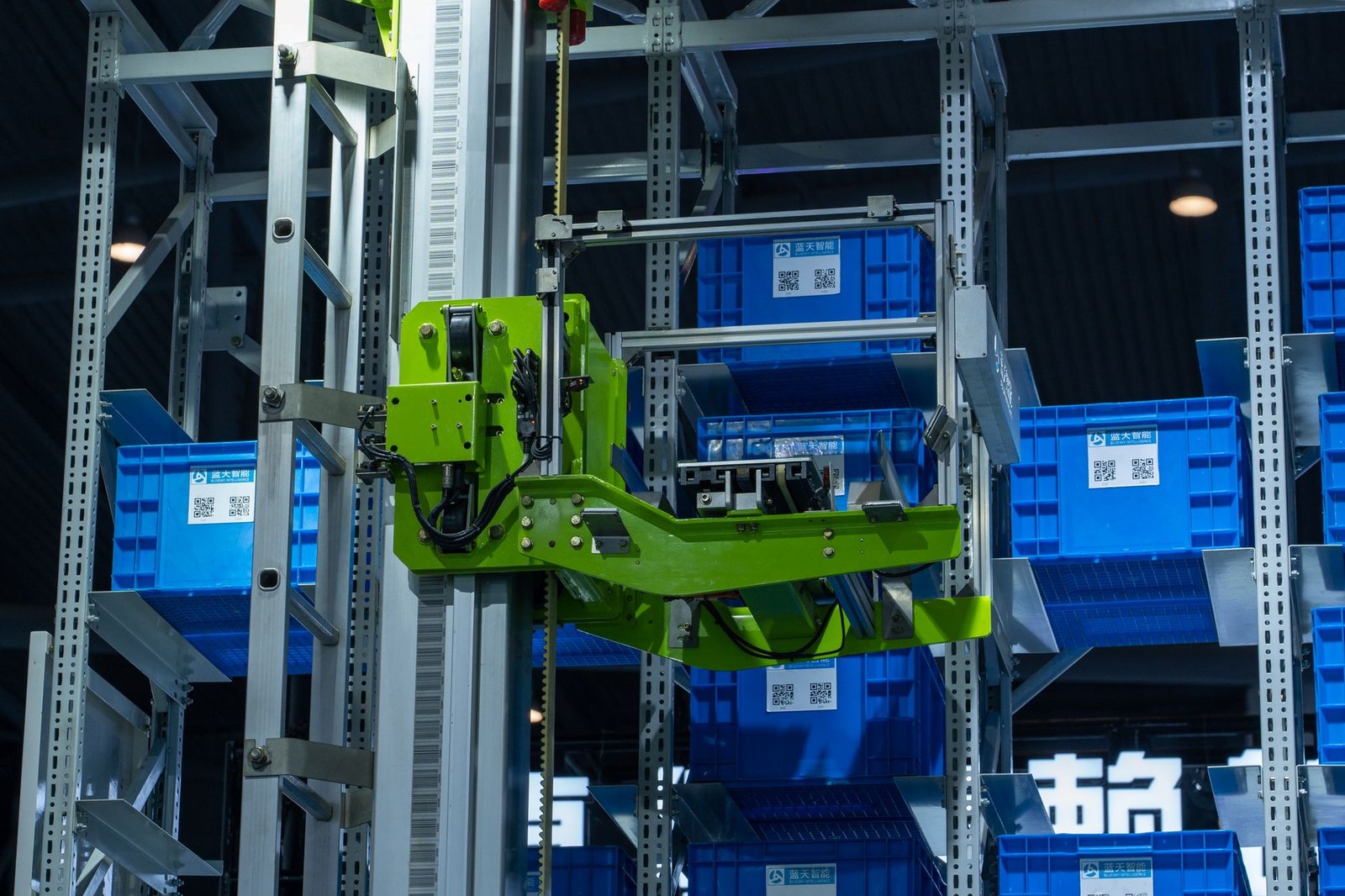
In the summer of 2022, Amazon’s fulfillment center in Robbinsville, New Jersey, recorded a 15% increase in units processed per hour after deploying a new generation of AI‑controlled Kiva robots. The boost came not from hiring more staff but from a software upgrade that let the robots learn optimal travel paths in real time and coordinate with a demand‑forecasting engine that predicts which SKUs will be needed next. This case follows the strategic decision to embed artificial intelligence into two core logistics functions—warehouse robotics and demand forecasting—and asks whether the payoff justifies the capital outlay, cultural shift, and supply‑chain risk.
Company & Industry Background
Amazon, founded in 1994 as an online bookseller, now operates the world’s largest e‑commerce platform, serving over 300 million active customers and generating more than $500 billion in annual revenue. Its fulfillment network spans 175+ fulfillment centers, 150+ sortation centers, and a growing fleet of delivery vans and aircraft. The logistics arm, Amazon Fulfillment Services (AFS), is a profit center that competes with third‑party 3PLs on speed, cost, and reliability.
The broader retail logistics industry has been under pressure to cut last‑mile costs while delivering sub‑two‑day shipping. Traditional warehouse automation—conveyor belts, fixed‑path robots, and simple pick‑to‑light systems—has plateaued in productivity gains. Industry analysts estimate that AI‑enabled robotics could add up to 30% more throughput without expanding floor space, a margin that directly translates into lower per‑order costs.
Amazon’s early foray into robotics began in 2012 with the acquisition of Kiva Systems, a company that introduced mobile shelving robots that bring inventory to workers. Over the past decade, Amazon has layered machine‑learning models on top of that hardware, turning static pick‑and‑place routines into dynamic, data‑driven workflows.
The Business Challenge
By 2020, Amazon’s fulfillment cost per order had risen to roughly $3.30, eroding the margin advantage it once enjoyed. Two intertwined problems emerged: (1) a surge in SKU variety—over 12 million distinct items—created “long tail” picking inefficiencies, and (2) seasonal spikes in demand (e.g., Prime Day, holiday season) repeatedly overloaded static robot fleets, forcing costly overtime and temporary labor hires. Leadership needed a solution that could (a) increase robot utilization during peak periods, (b) reduce the time workers spent walking between picks, and (c) improve inventory placement decisions before the order even arrived.
Analysis
Value Chain Impact
Integrating AI into robotics touches three primary value‑chain activities: inbound logistics, operations, and outbound logistics. AI‑driven demand forecasting informs inbound purchasing decisions, ensuring that high‑velocity SKUs are stocked closer to the robot fleet. In operations, reinforcement‑learning algorithms continuously adjust robot routes, minimizing travel distance. Outbound logistics benefit from tighter order‑batching, which reduces the number of pallets and trucks needed per shift.
SWOT Summary
| Strengths | Weaknesses |
|---|---|
| Massive data set on customer orders, enabling accurate demand forecasts. | High upfront capital for robot hardware and AI talent. |
| Opportunities | Threats |
| Scalable AI platform can be rolled out to 100+ centers within five years. | Regulatory scrutiny over worker displacement and algorithmic bias. |
Porter’s Five Forces
- Supplier Power: Robot manufacturers (e.g., Boston Dynamics, Locus Robotics) hold moderate power; Amazon mitigates this by developing in‑house hardware.
- Buyer Power: End customers demand faster delivery, pushing Amazon to continuously improve fulfillment speed.
- Competitive Rivalry: Competitors like Walmart and Alibaba are investing heavily in AI logistics, raising the bar for cost efficiency.
- Threat of Substitutes: Third‑party logistics providers offering AI‑enabled fulfillment services could erode Amazon’s market share if they achieve lower unit costs.
- Threat of New Entrants: High capital and data barriers keep new entrants limited, but niche AI startups could partner with regional retailers.
Financial Ratio Implications
While Amazon does not break out robot‑related expenses, analysts estimate that each new AI‑enabled robot costs $25,000–$35,000. If a center processes 1 million orders per year, a 10% productivity lift translates into roughly $3 million in cost avoidance. The incremental operating margin improvement, when aggregated across the network, can push overall fulfillment margin up by 0.5–1.0 percentage points—a material figure for a company operating on thin logistics margins.
Strategic Options Considered
- Option 1 – Incremental Hardware Upgrade: Purchase additional off‑the‑shelf robots and rely on existing rule‑based routing software. This path requires modest capital but offers limited scalability because routing logic cannot adapt to real‑time demand fluctuations.
- Option 2 – Full AI Stack Integration: Build a proprietary AI platform that couples reinforcement‑learning robot control with a cloud‑based demand‑forecasting model. This requires significant R&D spend, talent acquisition, and a phased rollout, but promises the highest long‑term productivity gains.
- Option 3 – Outsource to a Specialized 3PL: Contract a third‑party logistics provider that already runs AI‑enabled warehouses. This reduces internal risk but sacrifices control over the customer experience and may expose Amazon to data‑security concerns.
What the Company Actually Did / Outcome
Amazon chose Option 2. Beginning in 2021, it launched the “AI‑Fulfill” program, a cross‑functional effort that combined the robotics team, the Amazon Forecast machine‑learning service, and the supply‑chain planning group. The first pilot ran in two midsize fulfillment centers, where robots received real‑time routing updates from a reinforcement‑learning model trained on five years of order‑flow data. Simultaneously, a demand‑forecasting model predicted SKU velocity for the next 48 hours, prompting the system to reposition inventory on mobile shelves before orders arrived.
Results from the pilot were striking: robot travel distance fell by 22%, pick‑to‑pack time dropped from 45 seconds to 33 seconds, and overtime labor costs declined by 18% during the peak holiday season. Amazon scaled the AI‑Fulfill platform to 30 centers by the end of 2023 and announced a target of 100 centers by 2025. The company reported that fulfillment cost per order fell by roughly $0.25 on the sites using the AI stack, a figure that, when extrapolated, represents billions of dollars in annual savings.
Beyond cost, the AI rollout reinforced Amazon’s strategic narrative of “customer obsession.” Faster, more reliable shipping helped maintain Prime membership growth, which in turn fuels higher lifetime customer value. The initiative also sparked internal debate about workforce impact; Amazon responded by investing in upskilling programs that train floor workers to supervise robot fleets and interpret AI‑generated insights, thereby framing the technology as augmentative rather than purely substitutive.
Key Takeaways for MBA Students
- Data depth matters: Amazon’s advantage stems from decades of granular order data that fuels accurate forecasts and adaptive robot control.
- Integrating AI across multiple value‑chain stages yields compound gains that exceed the sum of isolated improvements.
- Strategic choices involve trade‑offs between control, cost, and speed of implementation; owning the AI stack gave Amazon the flexibility to iterate quickly.
- Technology adoption must be paired with workforce development to mitigate talent risk and maintain operational resilience.
- Quantifying AI ROI requires translating productivity lifts into concrete cost‑avoidance metrics rather than relying on vague “efficiency” language.
Discussion Questions
- How would you assess the risk of over‑reliance on AI‑driven robots in a scenario where a cyber‑attack disrupts the reinforcement‑learning platform?
- What alternative metrics, besides per‑order cost, should Amazon monitor to evaluate the long‑term sustainability of its AI‑fulfillment strategy?
- If a major competitor adopts a similar AI stack but outsources the hardware, how should Amazon defend its competitive advantage?
- How can Amazon balance the need for rapid AI deployment with ethical considerations around workforce displacement?
Disclaimer: This case study is intended for educational discussion only. All information is synthesized from publicly available sources; readers should verify specific figures against primary data before academic citation.